If you're preparing for your learner licence test in India, understanding warning signs and their meaning is absolutely essential. These cautionary signs make up a significant portion of the RTO exam questions, and getting them right can be the difference between passing and having to retake the test. In this comprehensive guide, you'll learn what warning signs are, how to identify them instantly, and exactly which ones you need to know for your exam.
What Are Warning Signs in Traffic?
Warning signs, also called cautionary signs, are road signs that alert drivers about potential hazards or changes in road conditions ahead. Unlike mandatory signs that give orders you must obey, warning signs simply inform you to be careful and adjust your driving accordingly.
According to official Indian traffic guidelines, cautionary signs are meant for cautioning the driver about the hazards lying ahead on the road. These signs are indicated in a triangular form with a red border and white background. The Kerala Motor Vehicles Department puts it simply: "Circles give orders, Triangles warn and Rectangles inform".
Why Warning Signs Matter for Your RTO Exam
In the RTO learner licence test, you'll face multiple questions where you need to identify road signs by their shape, color, and meaning. Warning signs are among the most commonly tested categories because they're essential for safe driving.
- Traffic signs and symbols are among the test's most often asked questions
- You'll be shown images of road signs and must interpret them correctly
- Many learners confuse cautionary signs with mandatory signs, leading to wrong answers
There are over 40 cautionary traffic signs in India as per Indian Roads Congress specifications. While you don't need to memorize all of them, knowing the most common ones will significantly boost your chances of passing.
Warning Signs and Their Meaning: Complete List for RTO Exam
Below is a comprehensive breakdown of the most important warning signs you'll encounter in the RTO exam, organized by category for easier learning.
1. Curve and Bend Warning Signs
These signs warn you about changes in road direction ahead. Slow down before entering curves to maintain control.
- Right Hand Curve / Left Hand Curve — Warns of a gradual bend in the road ahead. Reduce speed and stay in your lane.
- Right Hairpin Bend / Left Hairpin Bend — Indicates a very sharp turn, often on hilly roads. Slow down significantly and be prepared for oncoming traffic.
- Right Reverse Bend / Left Reverse Bend — Warns of a series of curves in opposite directions (S-shaped bend). Maintain steady speed and avoid sudden steering movements.
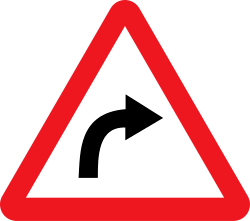 Right Hand Curve
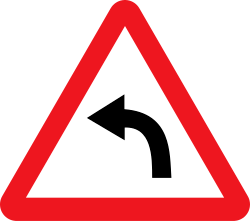 Left Hand Curve
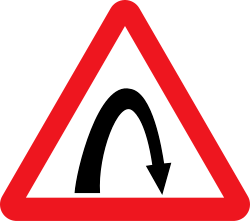 Right Hairpin Bend
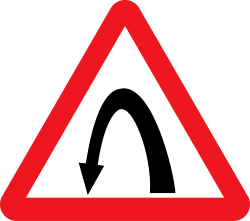 Left Hairpin Bend
2. Intersection Warning Signs
These signs alert you about upcoming road junctions where other vehicles may enter your path.
- Cross Road — A four-way intersection ahead. Look in all directions before proceeding.
- T-Intersection — Your road ends at a junction with another road forming a "T" shape. Prepare to stop or turn.
- Y-Intersection — The road splits into two directions ahead. Choose your lane early based on where you want to go.
- Side Road Right / Side Road Left — A smaller road joins from the right or left side. Watch for vehicles entering the main road.
- Staggered Intersection — Two junctions close together, offset from each other. Requires extra caution as vehicles may cross unexpectedly.
- Major Road Ahead — You're approaching a major road where you may need to give way. Slow down and check for traffic.
- Roundabout — A circular intersection ahead. Give way to vehicles already in the roundabout.
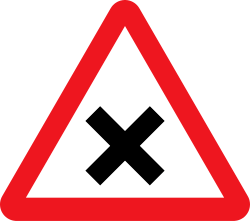 Cross Road
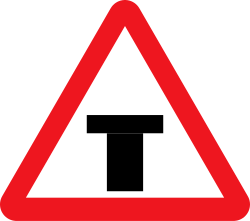 T-Intersection
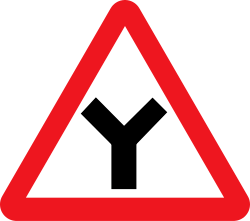 Y-Intersection
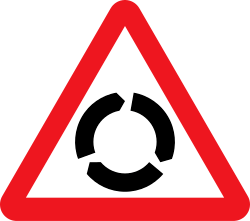 Roundabout
3. Pedestrian and School Zone Warnings
These signs indicate areas where you need to be extra cautious of people crossing or children present.
- Pedestrian Crossing — An area where pedestrians frequently cross the road. Slow down and be ready to stop.
- School Ahead — A school zone ahead. Reduce speed significantly and watch for children crossing.
- Cycle Crossing — A point where cyclists cross the road. Be alert for bicycles entering your path.
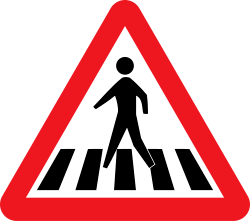 Pedestrian Crossing
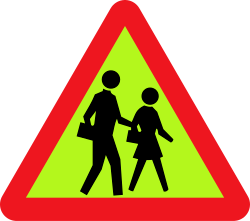 School Ahead
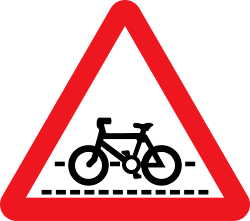 Cycle Crossing
Want to test your knowledge? Our free RTO mock test includes real exam-style warning sign questions — practice now and boost your confidence.
Start Free Practice Test4. Road Condition Warning Signs
These signs alert you about changes in road surface or width that require adjusted driving.
- Narrow Road Ahead — The road width reduces ahead. Be prepared for tighter space and possible oncoming vehicles.
- Narrow Bridge — A bridge ahead that is narrower than the approach road. Slow down and ensure no oncoming traffic before entering.
- Road Wideness Ahead — The road becomes wider ahead. Good news, but still stay alert.
- Slippery Road — The road surface may be slippery, especially during rain. Avoid sudden braking or acceleration.
- Loose Gravel — Loose stones or gravel on the road surface. Reduce speed to avoid skidding and protect your vehicle from flying stones.
- Hump or Rough Road — A speed breaker or uneven road surface ahead. Slow down to avoid vehicle damage.
- Dangerous Dip — A sudden dip in the road that may hide oncoming vehicles. Approach carefully.
- Steep Ascent / Steep Descent — A steep uphill or downhill gradient ahead. Use appropriate gear and maintain control.
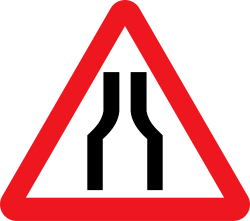 Narrow Road Ahead
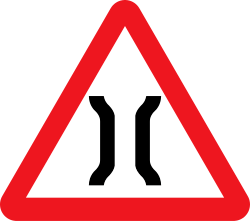 Narrow Bridge
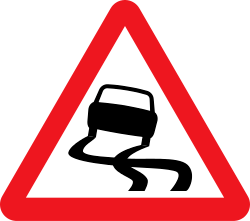 Slippery Road
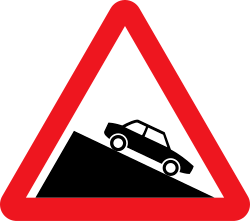 Steep Descent
5. Special Hazard Warning Signs
These signs warn about unique hazards that may not be obvious while driving.
- Men at Work — Road construction or maintenance work ahead. Slow down and follow any temporary instructions.
- Cattle — Animals (usually cattle) may cross the road. Common on rural roads across India.
- Falling Rocks — Risk of rocks falling onto the road, typically in hilly areas. Do not stop in these zones.
- Ferry — A ferry crossing ahead. Be prepared to stop and wait for the ferry service.
- Gap in Median — An opening in the road divider allowing vehicles to turn or cross. Watch for crossing traffic.
- Barrier Ahead — A physical barrier such as a railway crossing or toll gate ahead. Be ready to stop.
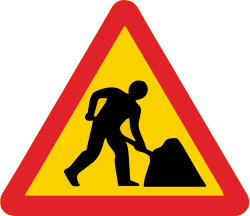 Men at Work
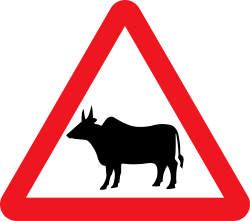 Cattle
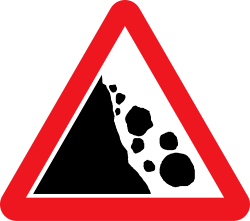 Falling Rocks
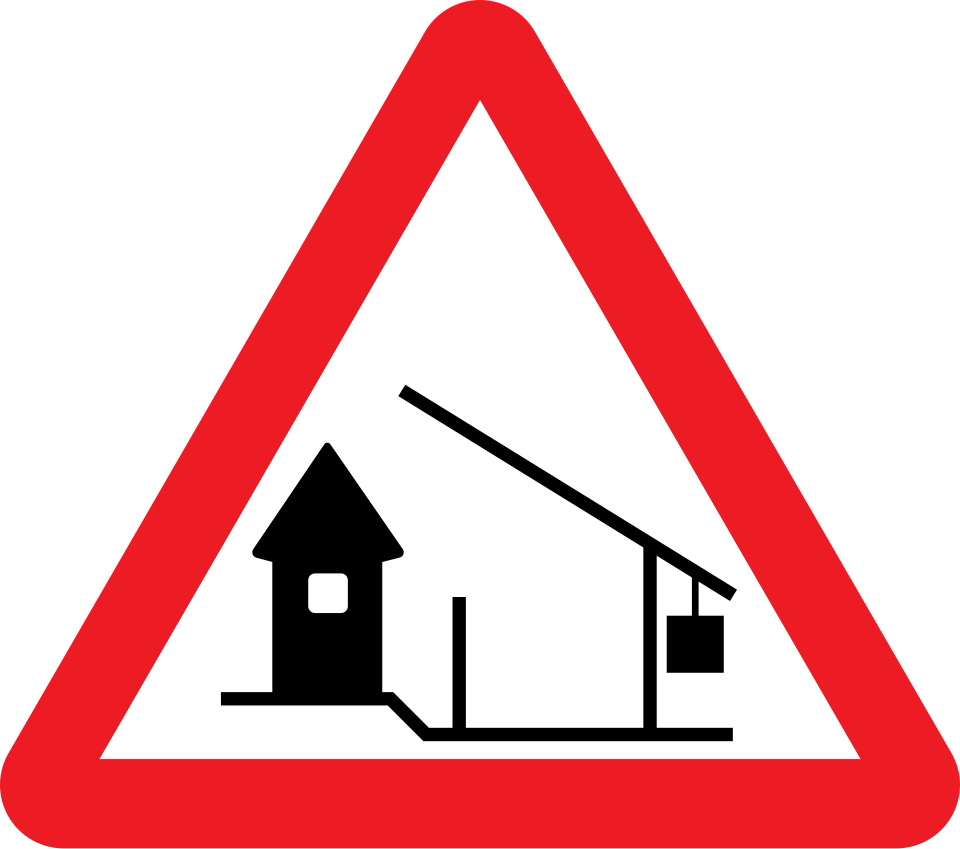 Barrier Ahead
6. Distance Warning Signs
These signs indicate how far ahead a hazard is located, giving you time to prepare.
- 50-100 Meters — The hazard is within 50 to 100 meters. Start slowing down now.
- 200 Meters — The hazard is approximately 200 meters ahead. Begin preparing to adjust your driving.
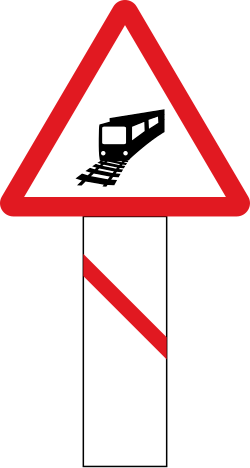 50-100 Meters
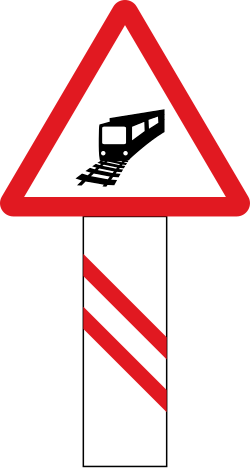 200 Meters
How to Remember Warning Signs for RTO Exam
Memorizing all 40+ cautionary signs can feel overwhelming. Use these proven techniques to make learning easier and more effective.
1. Group by Shape and Color
The easiest way to identify a warning sign is by its distinctive red triangle shape. If you see a red triangle in the exam question, you immediately know it's a cautionary sign warning about something ahead.
2. Learn by Categories
Instead of memorizing signs randomly, group them logically: curves and bends, intersections, road conditions, and special hazards. This creates mental "folders" that make recall easier during the exam.
3. Practice with Real Exam Questions
Reading about signs is helpful, but practicing with actual RTO exam questions is far more effective. Mock tests help you understand exactly how questions are framed and which signs appear most frequently.
Common Mistakes Learners Make with Warning Signs
Avoid these frequent errors that cause many applicants to lose marks on their RTO test:
- Confusing warning signs with mandatory signs — Red triangle = warning (information about hazards). Red circle = mandatory (orders you must follow).
- Mixing up Right Hairpin Bend and Left Hairpin Bend — The symbol shows the direction of the sharp turn. Look carefully at the arrow.
- Thinking Narrow Bridge and Narrow Road are the same — Narrow Bridge specifically indicates a bridge structure, while Narrow Road means the road itself narrows.
- Ignoring distance signs — Questions may ask "At what distance should you slow down?" The 50-100 meters and 200 meters signs matter.
- Rushing through questions — Take a moment to really look at the sign image. Many mistakes happen simply from not reading the visual carefully.
Warning Signs in Real-World Indian Driving
Understanding warning signs isn't just about passing the exam — it's about staying safe on India's diverse and often challenging roads. From the hairpin bends of the Western Ghats to cattle crossings in rural Punjab, these signs are placed for your protection.
Ignoring a cautionary sign might not result in an immediate fine like violating a mandatory sign would, but the consequences can be far more serious. A Pedestrian Crossing sign near a market area, a School Ahead sign during morning hours, or a Hairpin Bend sign on a hill station road — each warns you of a situation where reduced speed and increased awareness could prevent an accident.
Practice Warning Signs Before Your RTO Test
Reading this guide gives you the knowledge — but practice builds the confidence you need to walk into the RTO office and pass without stress.
Our free RTO mock test platform offers:
- 500+ real exam questions including all warning signs covered in this guide
- The exact format used in official learner licence tests
- Instant feedback so you learn from every mistake
- Available in both English and Hindi
Frequently Asked Questions About Warning Signs
Master Warning Signs and Pass Your RTO Exam
You now understand every important warning sign and its meaning for the Indian RTO exam. The next step is simple: practice with real test questions so you walk into the exam room confident and prepared.
Start Free RTO Mock Test NowFree. No registration required. Available in Hindi and English.